
Tasting profile For Mushrooms
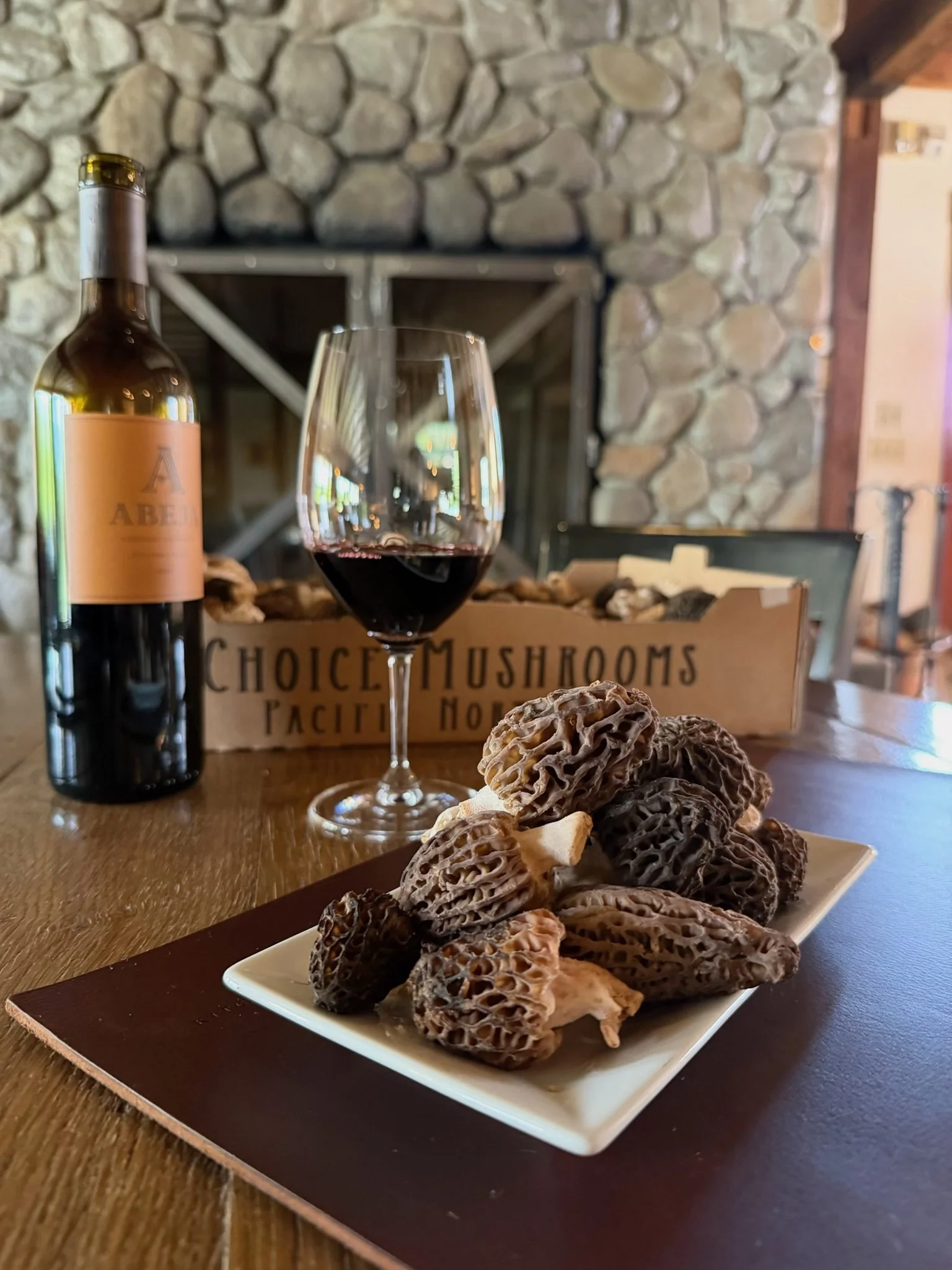
Chesed Farms Mushrooms, like other items being grown in the Walla Walla Valley have distinct tasting notes.
Mushrooms in general go well with many different types of foods, this includes but is not limited to:
Cheese (Parmesan, cheddar, mozzarella, goat, paneer, blue, mascarpone, ricotta, burrata)
Meat (Steak, lamb, bacon, chicken, beef, ham, fish, seafood, cod, oyster, prawn, salmon, pork, prosciutto, crab, veal)
Spices/Seasonings (Cilantro, parsley, garlic powder, onion powder, salt, chili, basil, chives, cinnamon, garam masala, Kadai masala, curry powder, ground coriander, cumin, turmeric, clove, black pepper, rosemary, thyme, marjoram, dill, tarragon, oregano, aniseed, mint, kefir lime leaves, lemongrass, bay leaf, Chinese 5 spice, chervil)
Liquor (Bourbon, red, white and dry rose wines, vodka, whisky, sherry, gin)
When we dive into examining a mushroom tasting profile we are using sight, smell, flavor, how to prepare, possible wine pairings and additional information about each mushroom.
Let’s explore a few of Chesed Farms mushroom tasting profiles…
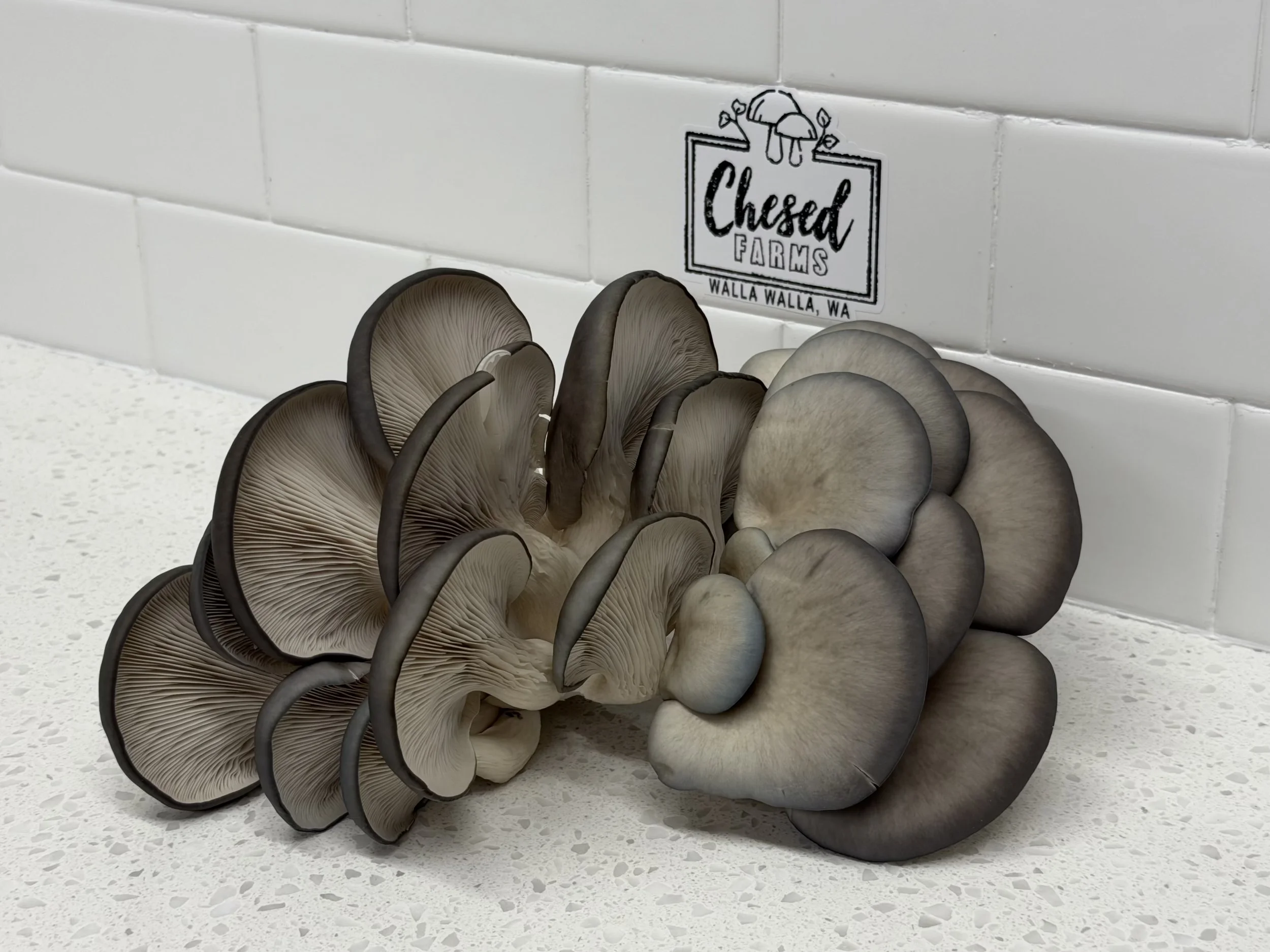
The Blue Oyster Mushroom:
(Sight): Blue Oyster Mushrooms can have short , tapered stems with flat, convex cap. They grow in large, shelf-like structures made of dense, overlapping clusters of individual fungi that vary in color. The surface of the cap is smooth, taut and brittle, sometimes containing a slight depression in the center and displaying wavy edges. Blue oyster mushrooms lose color as they become ready to harvest, becoming a lighter grey/blue. Blue Oyster Mushrooms, like all Oyster Mushrooms, have a fan-shaped cap. These caps are two to ten inches across. Oyster Mushrooms should have white gills. The gills attach to the stem and run down it.
(Smell): Blue Oyster Mushrooms smell slightly fishy or like seafood and often compared to anise.
(Flavor): Blue oyster mushrooms have a meaty or savory flavor. They have a slightly chewy texture that makes them feel a little similar to meat. The flavor is a bit more subtle and often up for interpretation. It is said that Blue Oyster Mushrooms have a mild seafood flavor. They are often described of having subtle hints of anise and a faint, earthy taste.
(How to Savor): Blue Oyster Mushrooms bring a soft, meaty texture to soups, stir-frys and salad recipes.
(Wine Pairing): Blue Oyster Mushrooms pair well with wine varieties such as sauvignon blanc, semillon, riesling, a light chardonnay, or light, fruity reds, like beaujolais.
(Additional Tasting Notes): Blue Oyster Mushrooms can be a good source of protein, they can be high in fiber and vitamin B.
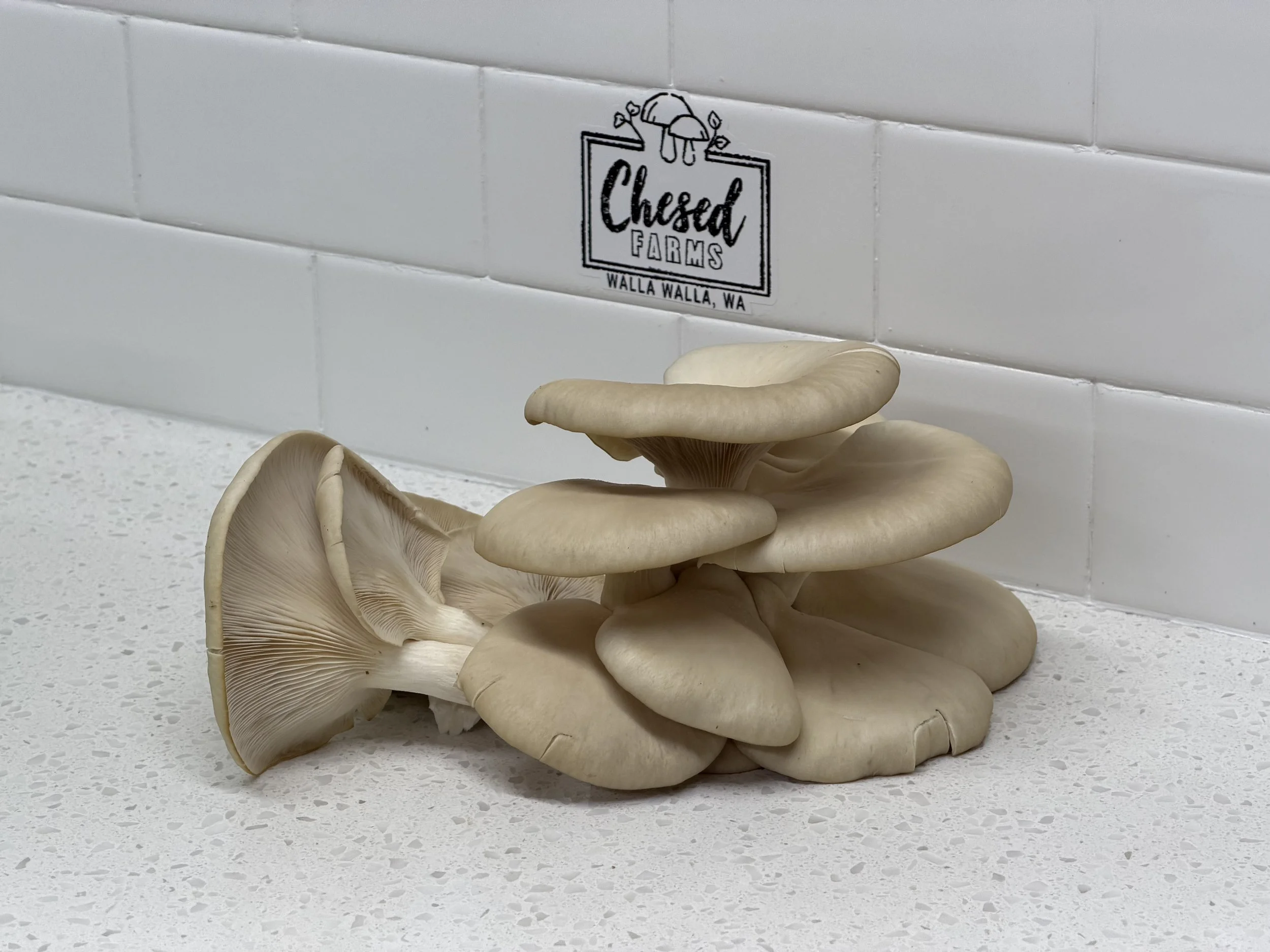
The Pearl Oyster Mushroom:
(Sight): Pearl Oyster Mushrooms have an Oyster or fan-shaped cap. They grow in clusters and are tan to dark-brown in color.
(Smell): Pearl Oyster Mushrooms have a fishy, slightly earthy scent.
(Flavor): Pearl Oyster Mushrooms have a woody, almost nutty flavor with hints of sweetness and earthy undertones. They possess a milder, more delicate flavor than other Oyster Mushrooms. They are slightly soft but have a chewy texture. They are thick and meaty.
(How to Savor): Pearl Oyster Mushrooms are great in stir-fries, stews and soups, sauces or as a pizza topping. They also make a great side dish.
(Wine Pairing): Pearl Oyster Mushrooms pair well with wine varieties such as sauvignon blanc, semillon, riesling, a light chardonnay, or light, fruity reds, like beaujolais.
(Additional Tasting Notes): Pearl Oyster Mushrooms, like other Oyster Mushrooms, may help to maintain a strong immune system through providing a great addition to low-calorie, nutrient-dense diets.
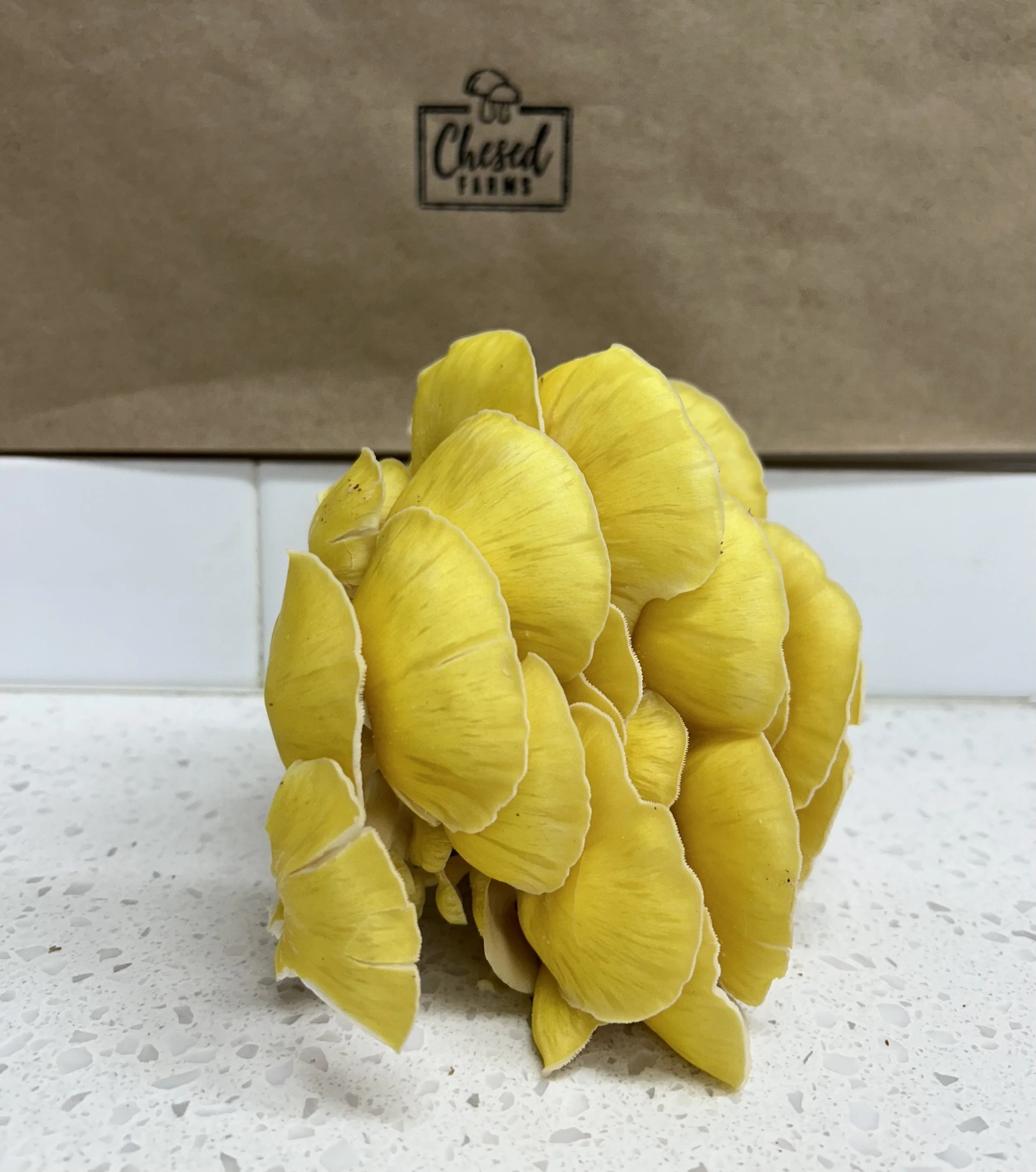
The Golden Oyster Mushroom:
(Sight): Golden Oyster Mushrooms grow in clusters of bright yellow to golden brown caps. They have a velvety, dry surface texture. The flesh is thin and white. They have a flat, plump, smooth and taut cap with a small indentation in the center and curled edges.
(Smell): Golden Oyster Mushrooms are without a strong smell. They have a light, fresh scent that some describe as smelling like fresh watermelon.
(Flavor): Golden Oyster Mushrooms have a mild taste. At times their taste is described like roasted cashews when they are sauteed in oil. Others describe the taste of Golden Oyster Mushrooms as being sweet with a mild citrus, cinnamon like flavor.
(How to Savor): Golden Oyster Mushrooms are great in lemony pasta dishes, in stir fries, sauteed and spread on toast, in pasta sauce, fried rice or in your favorite omelet.
(Wine Pairing): Golden Oyster Mushrooms pair well with a lighter, delicate wine like Pino Grigio, Riesling or Saison.
(Additional Tasting Notes): Golden Oyster Mushrooms, like all Oyster Mushrooms, may contain higher amounts of antioxidants than other cultivated mushrooms. They can be rich in amino acids called ergothioneine.
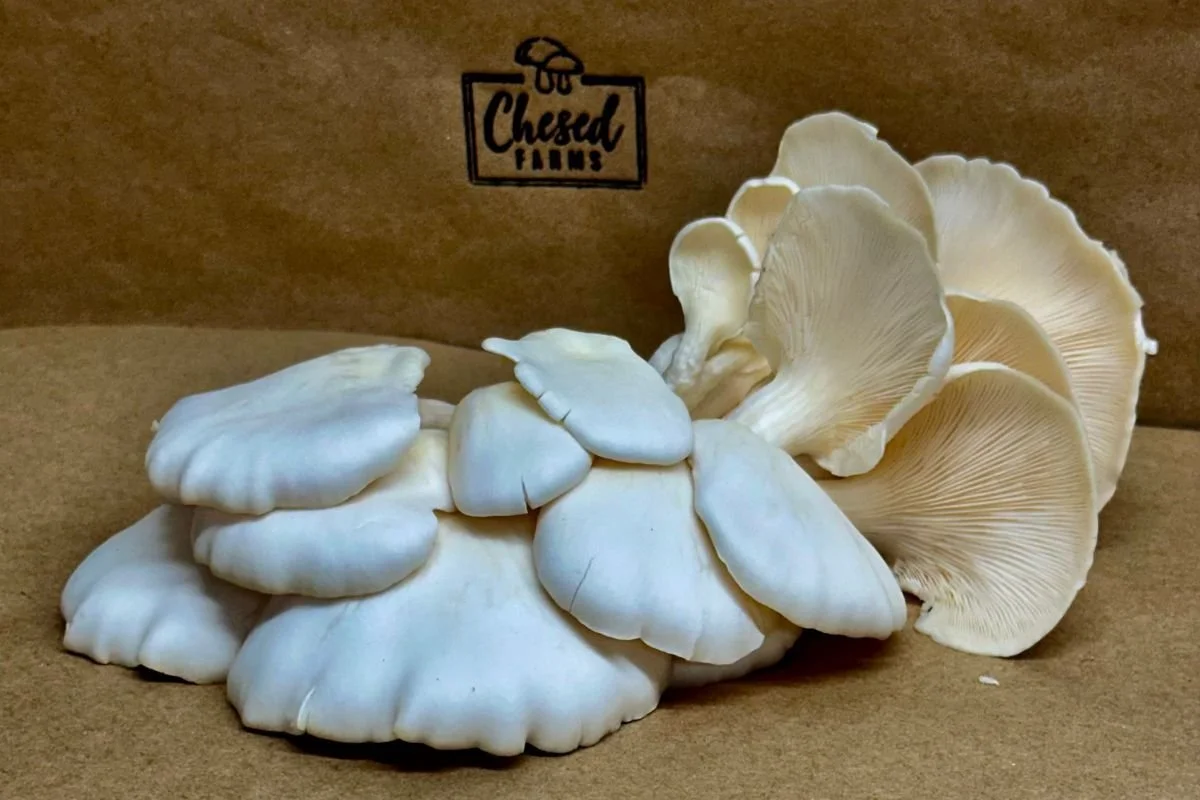
The Snow Oyster Mushroom:
(Sight): Snow Oyster Mushrooms are crisp white and have very large caps. They grow in dense, heavy clusters. Snow Oyster Mushrooms, like all Oyster Mushrooms, have a fan-shaped cap. These caps are two to ten inches across. Oyster Mushrooms should have white gills. The gills attach to the stem and run down it.
(Smell): A light earthy smell.
(Flavor): Snow Oyster Mushrooms have a wonderful earthy taste, with unique mild flavor and texture profile that is sweet and meaty with hints of licorice.
(How to Savor): The Snow Oyster Mushroom is perfect for braising, sautéing, roasting, frying, grilling, and stir-frying.
(Wine Pairing): Snow Oyster Mushrooms pair well with wine varieties such as sauvignon blanc, semillon, riesling, a light chardonnay, or light, fruity reds, like beaujolais.
(Additional Tasting Notes): Snow Oyster Mushrooms, like all Oyster Mushrooms, contain vitamins and minerals. Oyster Mushrooms contain compounds called polysaccharides. They also contain beta glucans, which might help to stimulate the immune system.
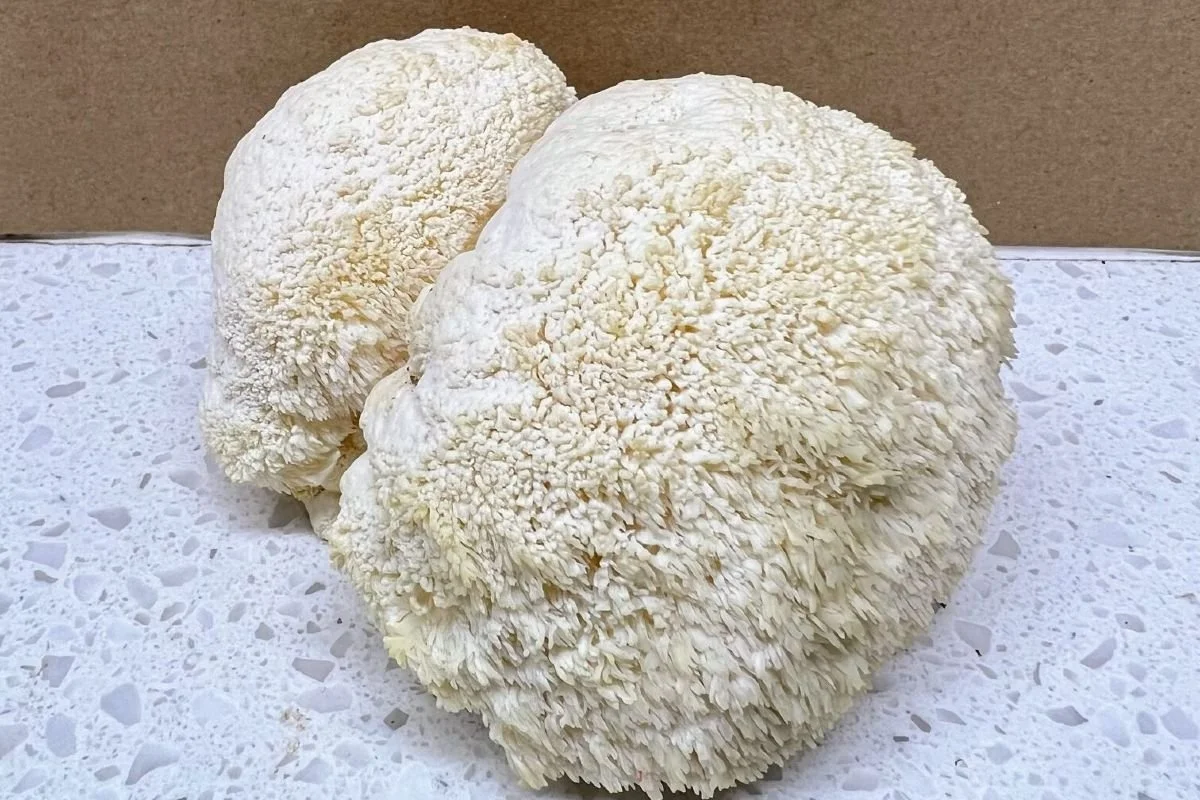
The Lion’s Mane Mushroom:
(Sight): Lion’s Mane Mushrooms are white in color. They have a unique shaggy outer texture, that is pom-pom like and resembles a lion’s mane.
(Smell): Lion’s Mane Mushrooms have a subtle, earthy aroma. It often has a sweet smell when fresh. Some claim it has a smell similar to dark chocolate.
(Flavor): Lion’s Mane has a unique flavor in the mushroom world. It is described as mildly sweet, with a meaty texture and mild savory taste. When cooked, the Lion’s Mane Mushrooms have a taste that resembles shellfish, such as crab, shrimp or lobster.
(How to Savor): Lion’s Mane can be sauteed or roasted. Once satueed or roasted they can be used in sandwiches, stir-fries or on their own. Lion’s Mane can be enjoyed raw, cooked, or in powder form. This mushroom can be used liked seafood and is great in dishes like risotto, pasta or soup. Lion’s Mane can also be enjoyed like pulled pork, fried chicken and more.
(Wine Pairing): Lion’s Mane can be cooked and served in a variety of flavor profiles. Wine pairing should be chosen based upon the dish prepared.
(Additional Tasting Notes): In addition to being a natural and healthy meat alternative for your meal, lions mane has shown to have attributes beneficial to brain health. People with shellfish allergies are not affected when eating lions mane mushrooms.
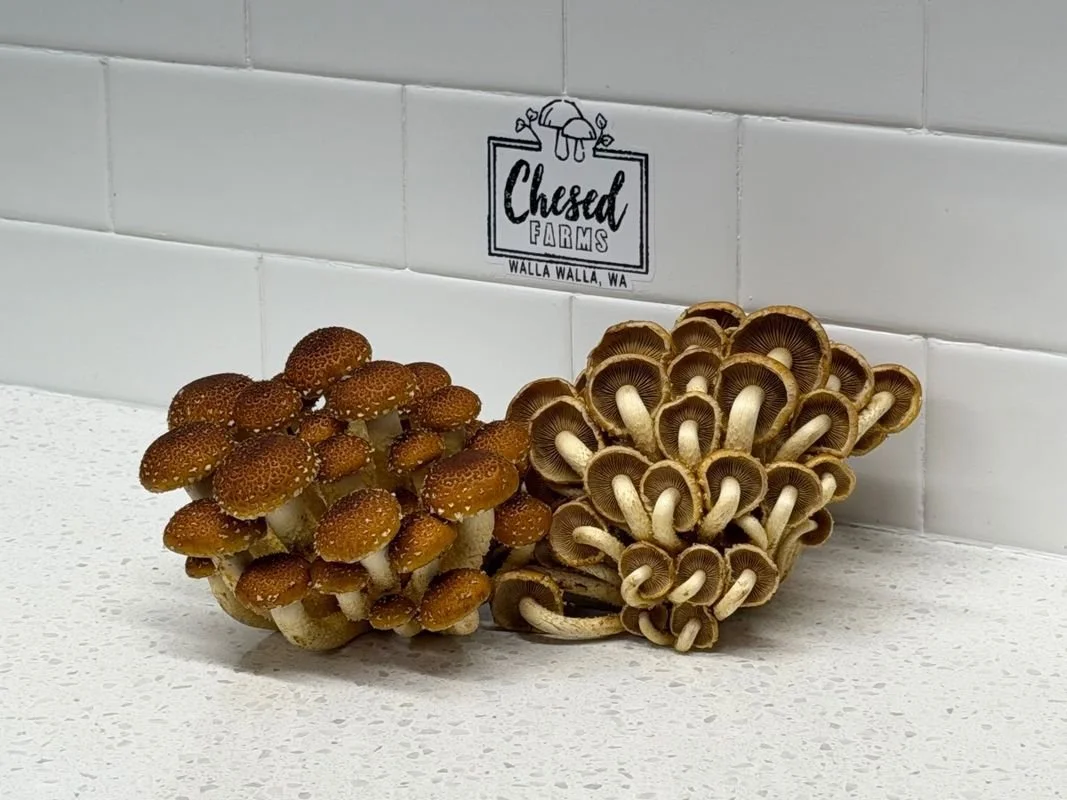
The Chestnut Mushroom:
(Sight): Chestnut Mushrooms have a small golden or chestnut brown cap with pink to dark brown gills and a thin white or beige stem.
(Smell): Chestnut Mushrooms do not have a distinctive smell.
(Flavor): Chestnut Mushrooms are tasty and meaty and are palatable raw or cooked. It is a versatile ingredient with a unique flavor and texture profile. It is both nutty and sweet with a peppery finish. The stems retain a crisp, crunchy texture.
(How to Savor): Chestnut Mushrooms excel in miso and other brothy soups. They are great in stir-fries or in your favorite sauce recipe. They are delicious seared with garlic and oil or butter and added atop salad or in spring rolls. They are great in pastas, quiches and casseroles.
(Wine Pairing): Chestnut Mushrooms can be cooked and served in a variety of flavor profiles. Wine pairing should be chosen based upon the dish prepared.
(Additional Tasting Notes): Chestnut Mushrooms are a super-dense source for vitamins and minerals. They can be anti-tumor, anti-inflammatory and anti-fungal. Chestnut Mushrooms might slow down osteoporosis. They contain vitamins B3, B5 and B12.
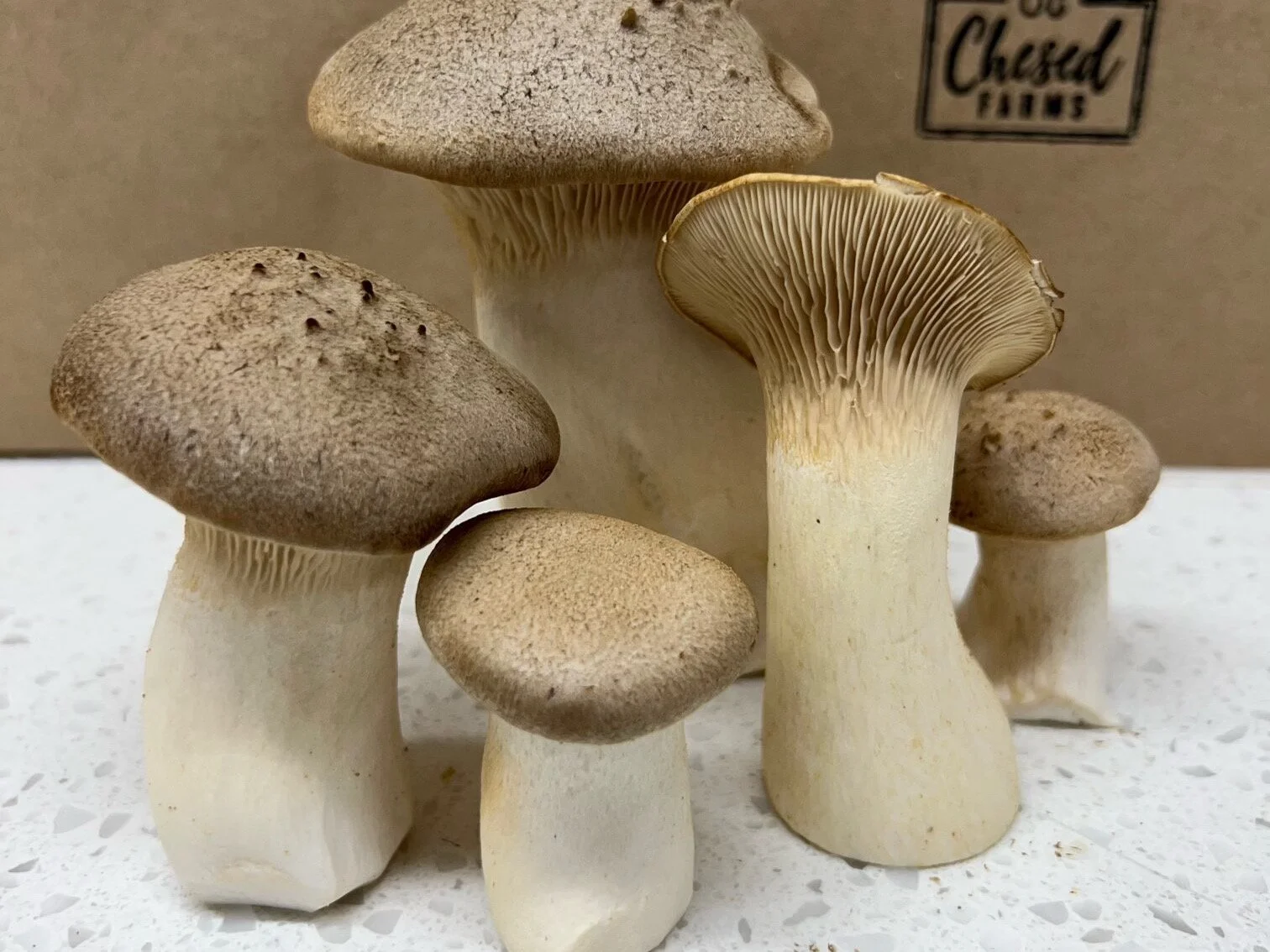
The Royal Trumpet Mushrooms:
(Sight): Royal Trumpet is the largest species of oyster mushroom. It has a thick, meaty white stem and a small tan cap.
(Smell): Royal Trumpet Mushrooms have little aroma when raw but smell slightly clean and fresh.
(Flavor): Royal Trumpet Mushrooms have a delicate, nutty flavor with a firm, meaty texture. When cooked, it develops typical mushroom savory flavors.
(How to Savor): Royal Trumpet Mushrooms can mimic seafood, like scallops, when cooked. Royal Trumpet Mushrooms can be sauteed, grilled, braised or broiled. The stem has a wonderful texture and can be prepared as well.
(Wine Pairing): Royal Trumpet Mushrooms can be cooked and served in a variety of flavor profiles. Wine pairing should be chosen based upon the dish prepared.
(Additional Tasting Notes): Royal Trumpet Mushrooms are low in calories and high in fiber. They contain beta-glucans, which could possibly boost the immune system and reduce inflammation. Royal Trumpets are a good source of niacin and have been shown to lower levels of LDL.
Interested in exploring mushroom recipes? Visit Chesed Farms Recipe page.